Everything You Need to Know About Salary Structures in India and Payroll Software
Your offer letter says ₹12 lakh a year. Your first paycheck says something much smaller. Welcome to the great Indian salary mystery, where CTC, basic pay, and deductions play hide and seek.
This guide explains how salary structures work in India, what the new labour codes changed, and how payroll software helps HR teams get every paycheck right.
What Is a Salary Structure in India?
A salary structure splits total pay into components. Employers usually quote it as CTC, or cost to company. CTC covers everything the company spends on you, including benefits and its own contributions. Take-home pay is what reaches your bank account after deductions. The two numbers rarely match.
Key Components of a Salary Structure
Most Indian salary packages include these parts:
- Basic pay: the fixed core of your salary.
- Dearness allowance (DA): an allowance that offsets rising living costs.
- House rent allowance (HRA): support for rent that can lower taxable income when you meet the tax rules.
- Special allowance: the balance that completes the package.
- Provident fund (PF): retirement savings, with employee and employer each contributing 12% of PF wages.
- Gratuity: a lump sum for long service.
- Bonus and variable pay: extra rewards tied to performance.
Money is not the only reward, though. Variable pay sits inside most packages, and employee recognition programs add a human touch that cash cannot buy. Pair both and you keep pay fair and morale high.

How the New Labour Codes Changed the Math
On November 21, 2025, India brought four labour codes into effect. They fold 29 older laws into one framework, according to the Ministry of Labour and Employment. The Code on Wages now defines “wages” as basic pay plus dearness allowance. If other components exceed 50% of total pay, the excess counts as wages.
Why does this matter? PF and gratuity both build on wages. A larger wage base means bigger retirement benefits and, often, a smaller monthly take-home. Gratuity equals 15/26 of your last drawn wages for each year of service. Fixed-term employees now qualify for gratuity after one year instead of five. Annual performance incentives stay outside wages, per the Ministry’s FAQs.
Why Payroll Software Matters More Than Ever
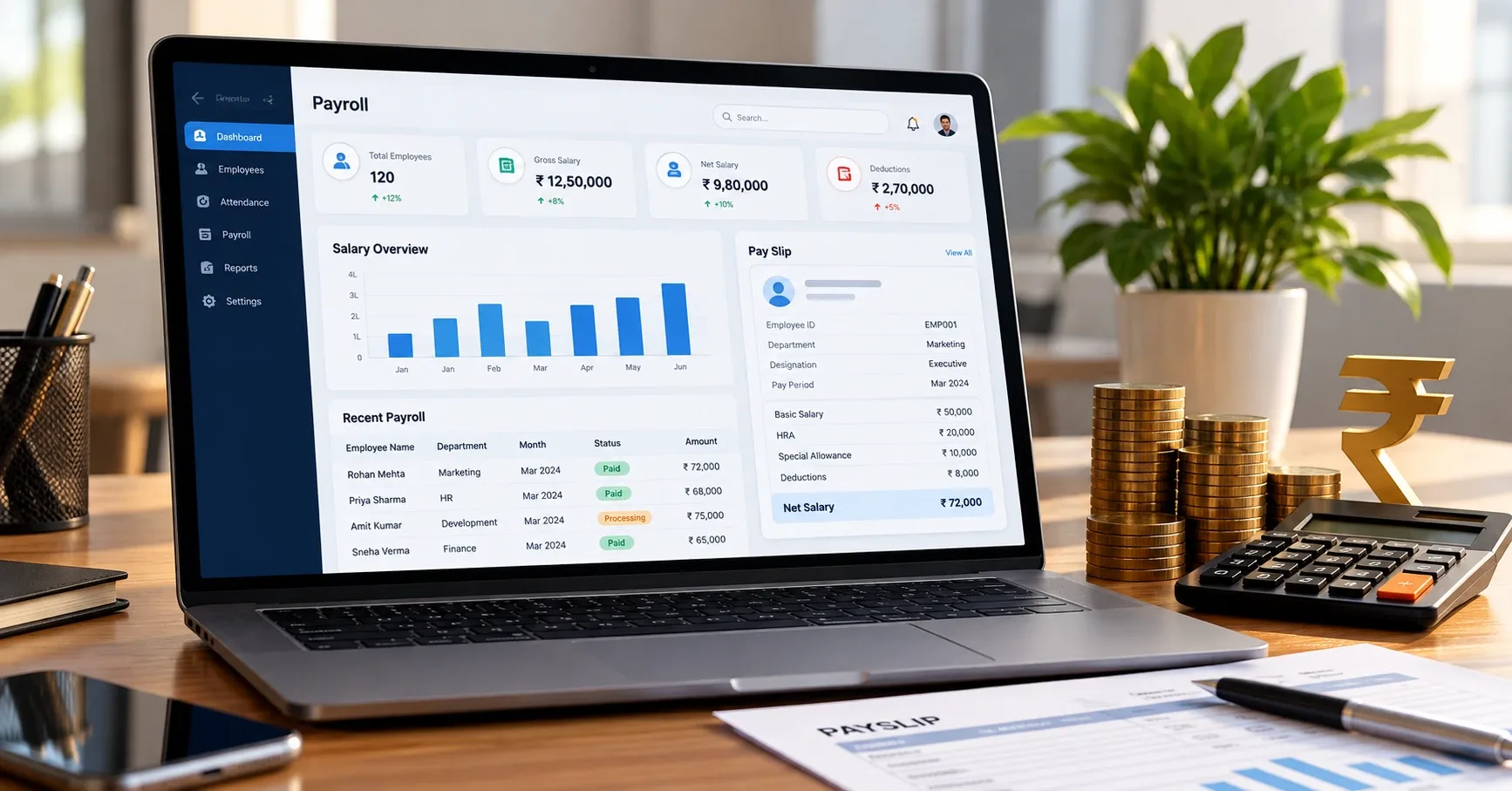
Rule changes hit spreadsheets hard. One broken formula and a hundred paychecks go sideways. Payroll software calculates salary, deductions, and payslips from one set of rules. Your team updates the rules once instead of hunting through hundreds of cells. It also leaves an audit trail, which helps when an auditor drops by.
Payroll does not live alone. A solid hr system software connects pay with joining dates, leave balances, and exits, so everyone works from the same record. Fewer handoffs mean fewer “who changed this cell?” mysteries.
Attendance drives pay too. Late marks, half days, and loss of pay all change the final amount. An attendance management system feeds clean data straight into the payroll run, so nobody argues over a missed punch on the 28th.
How to Design a Fair Salary Structure
Keep it simple. Follow these four steps:
- Check that basic pay plus DA meets the 50% wage rule.
- Compare each role against market pay.
- Explain every component in the offer letter.
- Review the structure once a year.
Clear structures build trust. Employees who understand their payslips ask fewer questions and stay longer.
About Revelar Solutions
Revelar Solutions is a digital engineering and marketing studio headquartered in Lucknow, with a presence in Delhi and clients across India and the USA. Its team built Klokwise, a human resource management software for Indian businesses that supports compliance automation and attendance management. If your spreadsheets are begging for retirement, Klokwise deserves a look.
Final Thoughts
A salary structure is more than a table of numbers. It shapes take-home pay, retirement savings, and trust between employer and employee. Learn the components, follow the new wage rules, and let payroll software handle the heavy lifting. Your HR team will thank you.