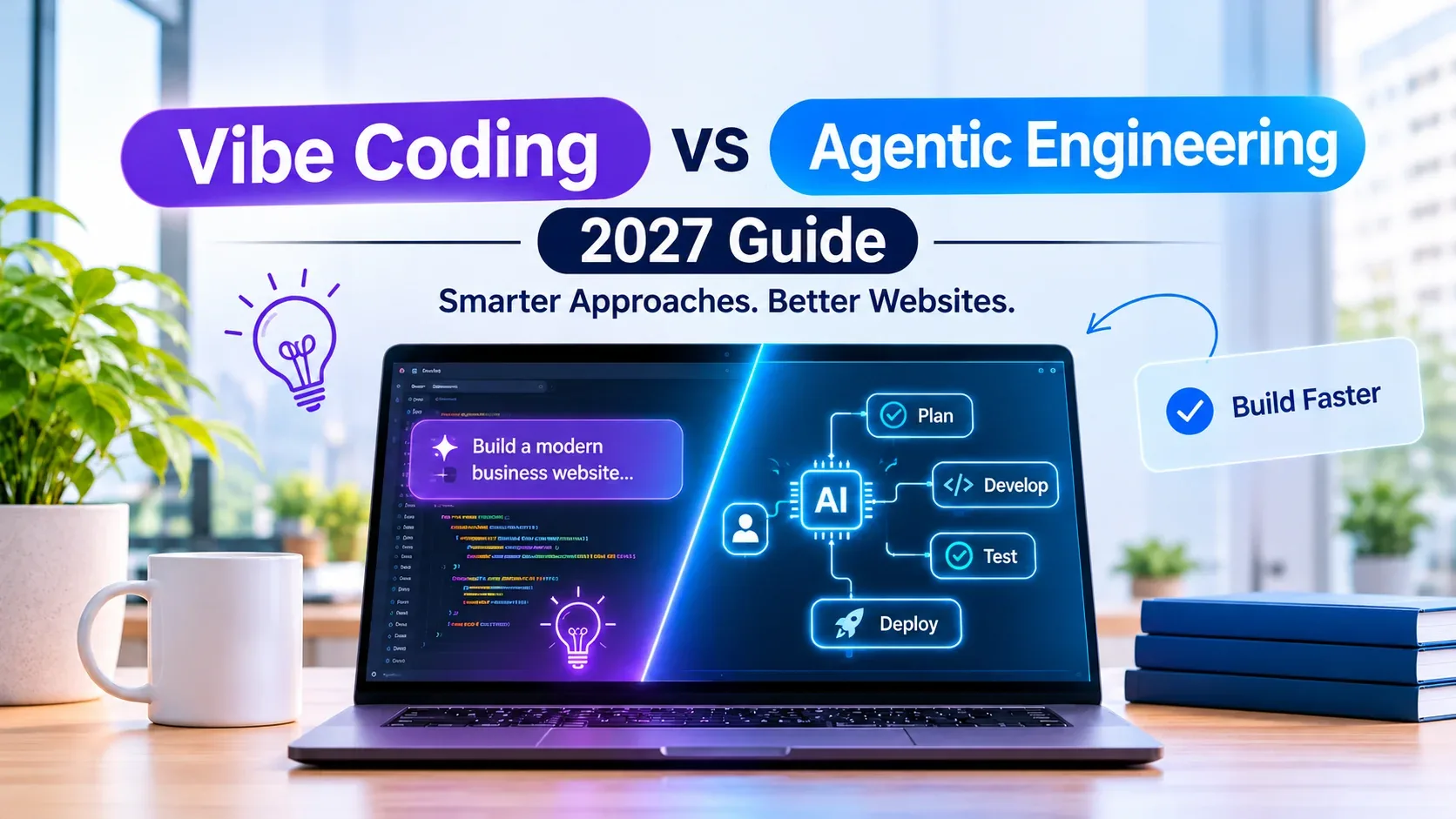
Vibe Coding vs Agentic Engineering: 2027 Guide
November 20, 2026
Artificial intelligence is changing how businesses approach software development. From building a simple landing page to developing complex business applications, AI tools now help people turn ideas into working software faster. At Revelar Solutions, we see this shift as an important development for businesses exploring modern digital solutions. However, faster coding does not automatically mean better software. That's where the difference between vibe coding and agentic engineering becomes important.
Both approaches use AI, but they follow different development philosophies. One focuses on quickly turning ideas into code, while the other introduces more structured planning, testing, and engineering oversight. If you're choosing a Website Development Company or planning your next digital project, understanding this difference can help you make a smarter decision.
 Vibe Coding Illustration
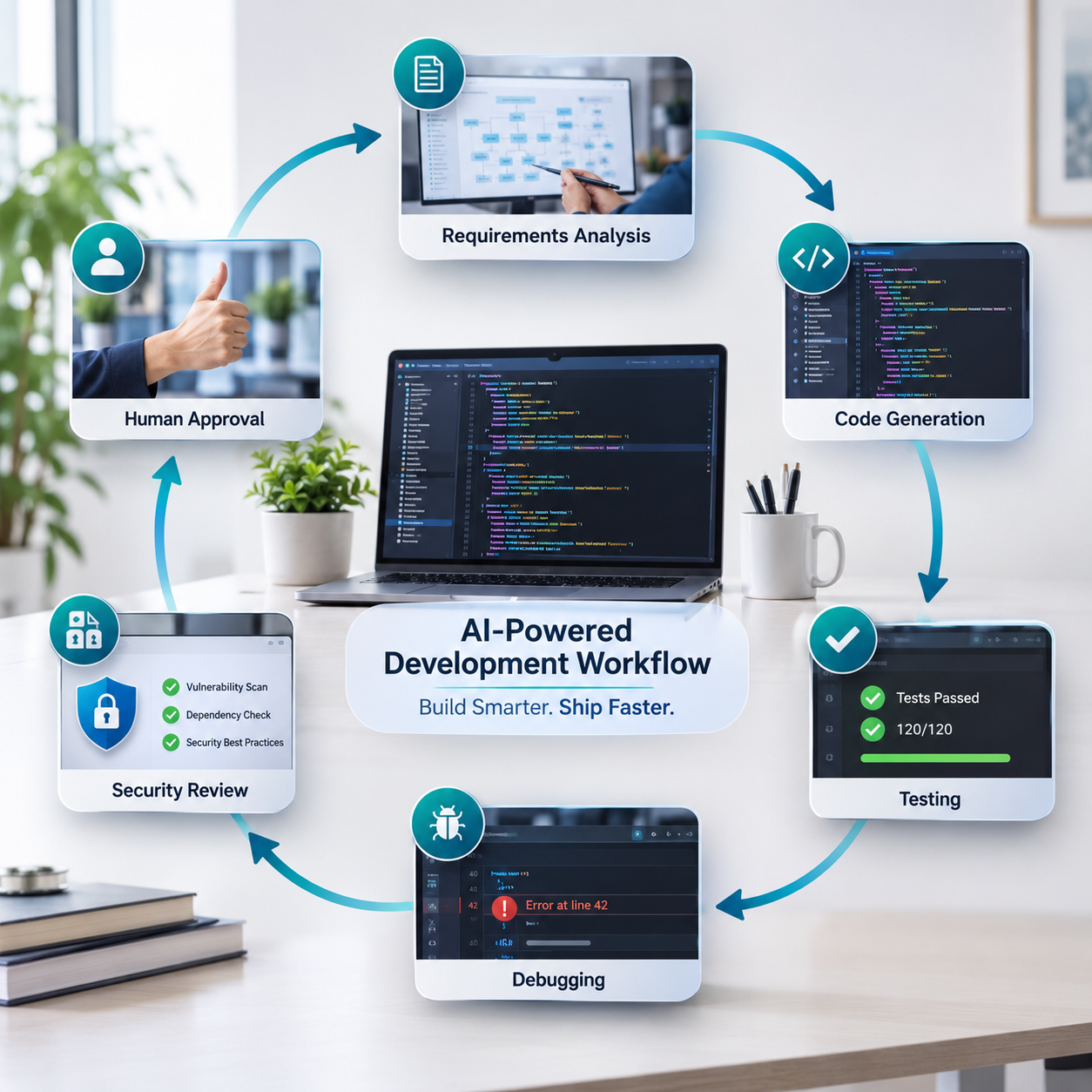 Agentic Engineering Workflow
I can still provide the complete article, SEO metadata, image prompts, and image placement instructions, but I couldn't generate the images right now.
The important difference is not how much AI a developer uses. It is how they manage the development process.
A developer can use AI extensively and still follow traditional engineering principles. Likewise, an AI agent cannot guarantee quality simply because it can execute multiple tasks.
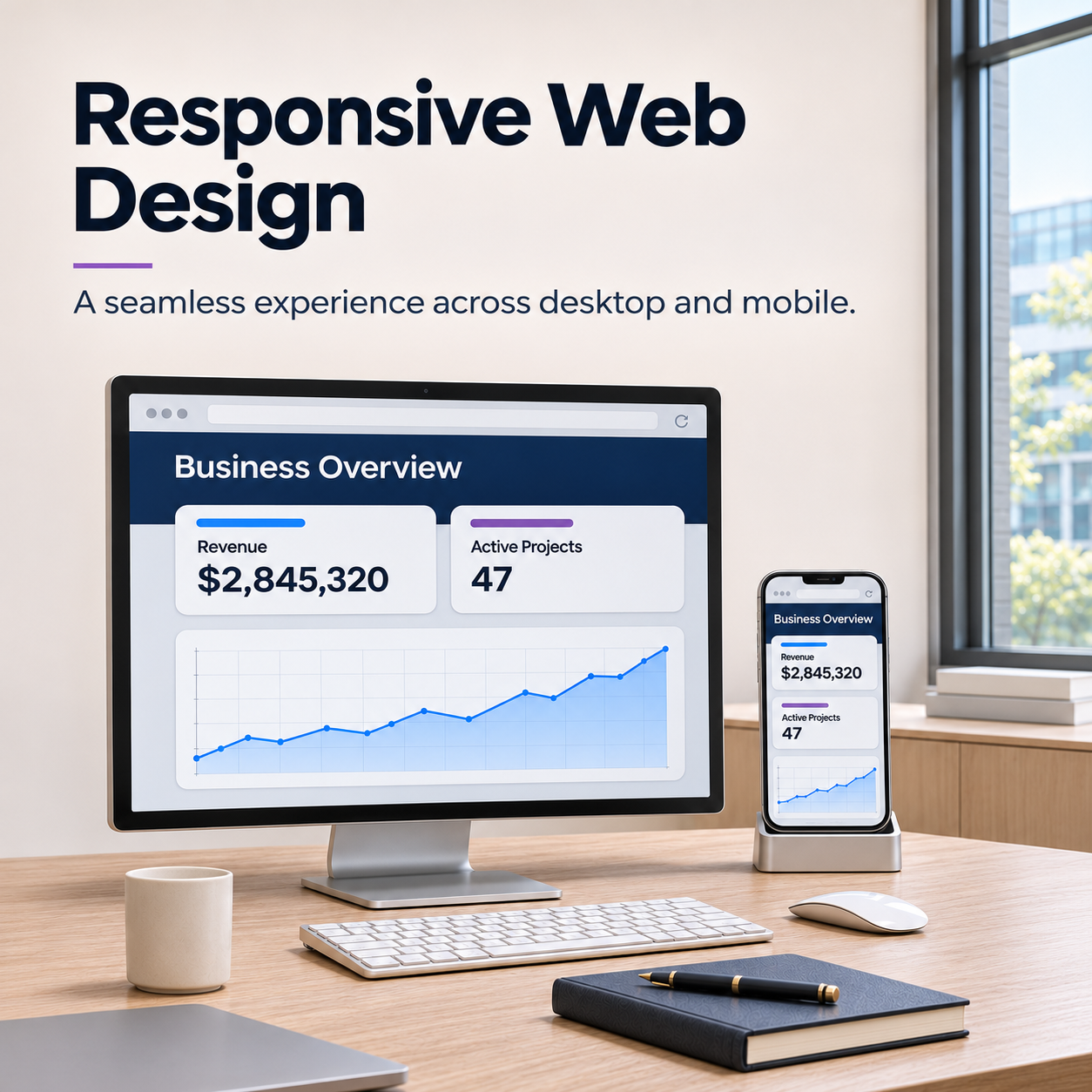 Professional Website Development
What Is Vibe Coding?
Vibe coding is an AI-assisted approach to software development where users describe what they want in everyday language and let AI generate or modify the code. Instead of manually writing every line, a person explains an idea, reviews the result, and asks AI to make changes. The process often involves repeated prompting until the software looks and behaves as expected. For example, imagine you want a website for your new coffee shop. You might tell an AI tool: "Create a modern coffee shop website with an online menu, location details, and a reservation form." The AI generates the initial structure. You can then request changes to colors, layouts, buttons, and other elements. Sounds convenient, right? The approach became widely discussed after computer scientist Andrej Karpathy introduced the term in February 2025.Key characteristics of vibe coding
-
Natural-language instructions instead of writing all code manually.
-
Rapid website and application prototyping.
-
AI-generated layouts, components, and functionality.
-
Quick changes through conversational prompts.
-
Less emphasis on understanding every generated code detail in informal implementations.
Vibe Coding IllustrationWhat Is Agentic Engineering?
Agentic engineering takes AI-assisted development further by introducing AI agents into a more structured software engineering workflow. Rather than simply generating code from individual prompts, AI agents can work through connected development tasks. Depending on their tools and permissions, they may analyze requirements, explore an existing codebase, write code, run tests, identify errors, and propose corrections. Human developers still provide direction, review important decisions, and take responsibility for the final product. For example, imagine you're developing an employee management platform. Instead of asking AI to create one screen at a time, you could assign a broader task: "Develop an employee leave management module that integrates with the existing authentication system, follows the current database structure, includes validation, and passes the relevant tests." An appropriately configured coding agent can investigate the project, plan changes, edit files, and run available checks. The developer then reviews the changes before approving them.Key characteristics of agentic engineering
-
AI agents handle connected development tasks.
-
Developers define requirements and technical boundaries.
-
Agents can inspect and modify existing codebases.
-
Testing and debugging become part of the workflow.
-
Human oversight remains essential.
-
Security, maintainability, and code quality receive greater attention.
Agentic Engineering WorkflowVibe Coding vs Agentic Engineering: 2027 Guide
Vibe Coding vs Agentic Engineering: Key Differences
Although both approaches use artificial intelligence, their workflows and levels of engineering control differ.| Comparison | Vibe Coding | Agentic Engineering |
|---|---|---|
| Main focus | Rapid creation | Structured development |
| Instructions | Conversational prompts | Defined tasks and objectives |
| AI involvement | Generates and modifies code | Performs connected development tasks |
| Human role | Guides and reviews | Plans, supervises, and validates |
| Testing | May be informal | Integrated into the workflow |
| Best suited for | Prototypes and experiments | Complex and maintainable software |
| Risk management | Depends heavily on user review | Uses defined engineering controls |
Why Is Agentic Engineering Becoming Important for Businesses?
Businesses need more than attractive interfaces. They need software that supports daily operations, protects information, and grows alongside their requirements. This makes engineering discipline particularly important. Consider an e-commerce website. It may include customer accounts, payment integrations, product catalogs, inventory management, and order tracking. A quick AI-generated prototype might demonstrate the basic experience. However, a production-ready platform also needs reliable data handling, payment security, error management, and proper testing. Agentic engineering can help development teams coordinate these connected tasks. Here are some important areas where this approach can help.1. Faster Development Workflows
AI agents can handle repetitive development tasks, generate code, and help investigate errors. Developers can spend more time on architecture, product decisions, and complex technical challenges. However, speed depends on project complexity, tool capabilities, and the quality of human supervision.2. Better Testing and Debugging
Testing should never become an optional activity simply because AI generated the code. Coding agents can run available tests, inspect failures, and suggest corrections. Developers must still evaluate whether those tests cover the actual business requirements.3. Improved Project Management
Complex projects involve multiple connected tasks. Agentic workflows can help organize work across frontend development, backend functionality, integrations, and documentation. This can make development easier to coordinate, especially when teams manage large codebases.4. More Attention to Security
AI-generated code requires security reviews just like manually written code. Developers should examine authentication, authorization, input validation, data access, and third-party dependencies. The NIST Secure Software Development Framework provides established practices that development teams can integrate into their software lifecycle.Can Vibe Coding Build Professional Websites?
Yes, but the answer depends on the website. Vibe coding can help create:-
Personal websites and portfolios.
-
Landing pages.
-
Early-stage startup prototypes.
-
Basic business websites.
-
Internal tools with limited functionality.
When Should You Choose Agentic Engineering?
Agentic engineering becomes particularly useful when a project requires multiple connected components and ongoing technical management. Consider these examples: Custom business applications: Applications with user roles, dashboards, databases, and complex workflows need structured development. E-commerce platforms: Payment processing, customer accounts, inventory, and order management require careful testing. Enterprise software: Large applications need consistent architecture, access controls, documentation, and maintenance. SaaS products: Subscription management, APIs, user authentication, and data management demand reliable engineering practices. Existing website upgrades: Updating an established codebase requires developers to understand existing functionality before making changes. Agentic engineering does not eliminate project risks. It provides a more controlled way to use AI within a professional development process.What Should Businesses Expect From a Website Development Company in 2027?
As AI tools become more capable, businesses should evaluate development partners on their engineering practices rather than simply asking whether they use AI. A reliable Website Development Company should understand the business problem before recommending a technical solution. Here are some important things to evaluate.Technical Planning and Architecture
Your development partner should explain how the website will work, what technologies it requires, and how its components will communicate. A clear architecture helps prevent unnecessary complexity as the business grows.User Experience and Responsive Design
A website should provide a consistent experience across desktop, tablet, and mobile devices. Good UI/UX design considers navigation, accessibility, readability, and the actual needs of visitors.Website Performance
Slow websites frustrate visitors and can affect the overall user experience. Developers should consider image optimization, efficient code, caching, and Core Web Vitals.Security and Data Protection
Ask how the team manages authentication, permissions, sensitive information, software dependencies, and security testing. Security should influence development decisions from the beginning, not appear as a last-minute checklist.Testing and Maintenance
A development project should include appropriate functional testing, error handling, deployment checks, and a plan for future updates. A website launch is the beginning of its operational life, not the end of the development process.Professional Website DevelopmentHow Revelar Solutions Approaches Modern Web Development
At Revelar Solutions, we believe successful digital products require a balance between technology, usability, and business objectives. AI tools can support development, but the final solution must address the actual needs of the business. Our approach to modern web development focuses on:-
Custom Web Development Services: Building websites around specific business requirements instead of relying on unnecessary templates.
-
Responsive Web Design: Creating interfaces that work across different screen sizes.
-
UI/UX Design: Making digital experiences easier to navigate and understand.
-
Backend Development: Building the functionality that supports business operations.
-
Website Optimization: Improving performance, usability, and technical foundations.
-
Ongoing Maintenance: Supporting websites as business requirements change.
The Future of Software Development: What Comes Next?
The future of software development will likely involve closer collaboration between developers and AI agents. However, it would be misleading to suggest that every development task will become fully autonomous by 2027. AI capabilities continue to evolve, but software still requires people who understand business requirements, technical architecture, security, and user expectations. Three developments deserve attention: More AI-assisted workflows: Developers can increasingly delegate repetitive coding and debugging tasks to AI tools. Greater emphasis on engineering oversight: Teams will need clear review processes, testing strategies, and permission controls. More focus on business outcomes: Companies will evaluate software based on reliability, usability, and operational value rather than how quickly someone generated the initial code. The winning approach will not necessarily be the one that produces the most code. It will be the one that consistently delivers useful, secure, and maintainable software.Final Thoughts
Vibe coding and agentic engineering represent two different ways of working with AI in software development. Vibe coding makes experimentation more accessible and helps people turn ideas into prototypes. Agentic engineering introduces a more structured approach to managing complex development tasks with AI assistance and human supervision. Neither approach automatically guarantees a successful product. For businesses, the real priority should be finding the right balance between development speed, technical quality, security, and long-term value. If you're planning a new website or digital product, work with a development team that understands these priorities. At Revelar Solutions, we believe good technology should solve real problems, not simply generate impressive-looking code.About Revelar Solutions – Contact Us
Need a website that does more than look attractive? Revelar Solutions helps businesses build digital experiences through custom website development, mobile applications, UI/UX design, and technology solutions. Let's discuss your next digital project.Frequently Asked Questions
1. What is the difference between vibe coding and agentic engineering?
Vibe coding uses natural-language prompts to generate and modify software, often with an emphasis on rapid experimentation. Agentic engineering uses AI agents within a more structured engineering workflow that includes planning, coding, testing, and human review.
2. Is vibe coding good for professional website development?
Vibe coding can help create prototypes, landing pages, and simpler websites. However, production websites often need additional engineering work, including security reviews, performance optimization, accessibility checks, and functional testing.
3. Will AI replace website developers by 2027?
AI may automate or accelerate certain development tasks, but professional software development also requires problem-solving, architecture decisions, security expertise, and an understanding of business requirements. AI is more accurately viewed as a development tool than a complete replacement for engineering expertise.
4. Is agentic engineering better than traditional coding?
Neither approach is universally better. Agentic engineering can help developers coordinate complex tasks and automate repetitive work. Traditional coding knowledge remains important for reviewing generated code, understanding architecture, and solving difficult problems.
5. Can AI agents build a complete website?
AI agents can assist with frontend development, backend functionality, testing, and integrations. However, developers should review the final product for functionality, security, performance, and business requirements.